GAUDÍ
Antoni Gaudí: the architect of light
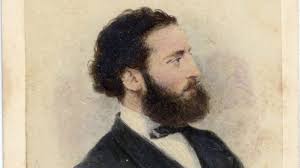
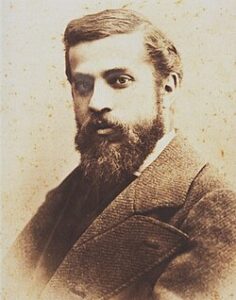
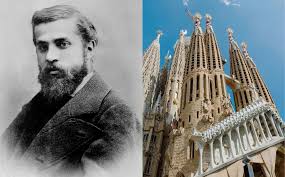
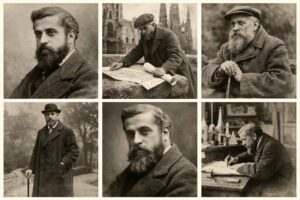
Antoni Gaudí i Cornet (1852–1926) was a Catalan architect whose genius transformed modern architecture. Born in Reus, from a young age he showed a special sensitivity toward natural forms and craftsmanship—influences that would define his entire body of work. His education at the Barcelona School of Architecture allowed him to develop a unique style, where geometry, faith, and nature merge into living structures. Images of his youth reflect a disciplined creator with an intense gaze, who conceived architecture as a spiritual expression. During his maturity, Gaudí dedicated his life to the Sagrada Família, a project that became his personal and religious mission. Photographs show him reviewing blueprints and models, immersed in an aesthetic pursuit that transcended the technical to reach the divine. In his final years, he adopted an austere and contemplative life. Portraits of his old age reveal a man who had renounced the world to consecrate himself to his work. His workshop, filled with models and sketches, was the laboratory where he shaped his vision of an organic architecture inspired by natural creation. Gaudí passed away in 1926, leaving behind a legacy that turned Barcelona into a universal symbol of creativity and spirituality. His work lives on, reminding us that architecture can be a prayer made of stone and light

Timeline
Masterpieces: Architectural Synthesis
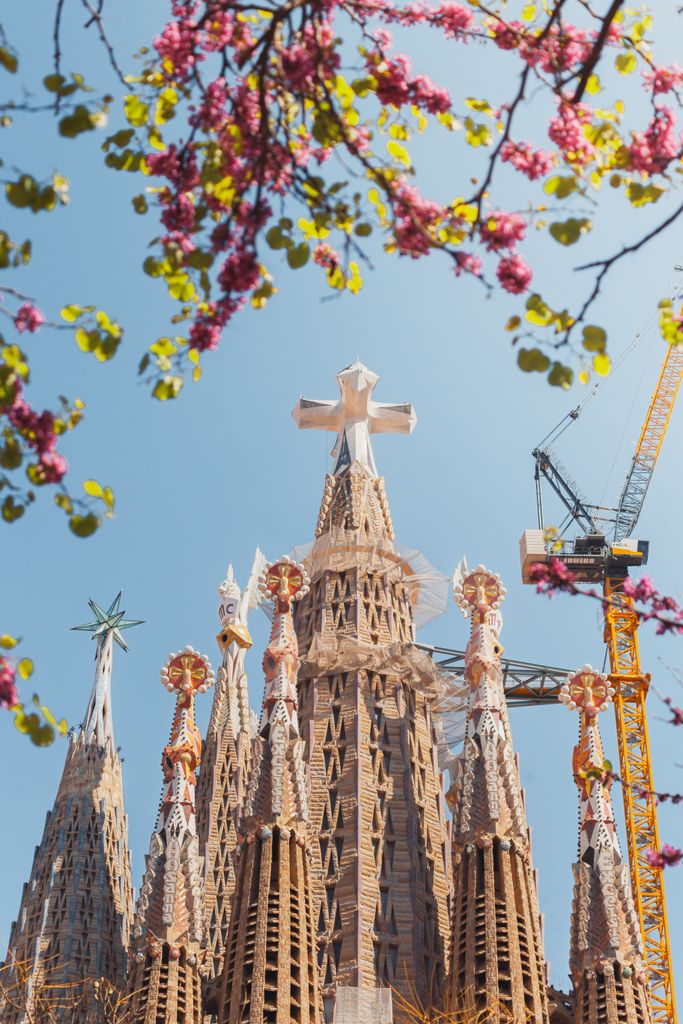
The Sagrada Familia
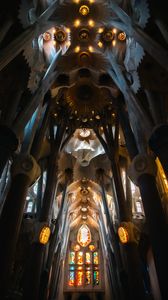
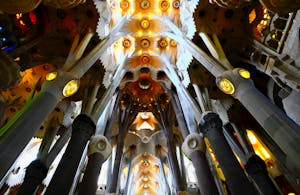
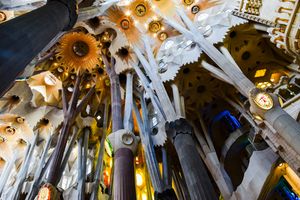
His unfinished masterpiece, a synthesis of his architectural and spiritual vision that uses light as a central structural element

Casa Batlló
A modernism icon, distinguished by its organic facade, iconic dragon-back roof, and masterful use of light.
Park Güell
A public park that fuses architecture with the natural environment, where Gaudí experimented with geometric forms and the technique of trencadís.
